Category: GEN AI

LLM_log #027: Agent Capabilities and Harness Engineering — Why Agents Are Systems, Not Just Models

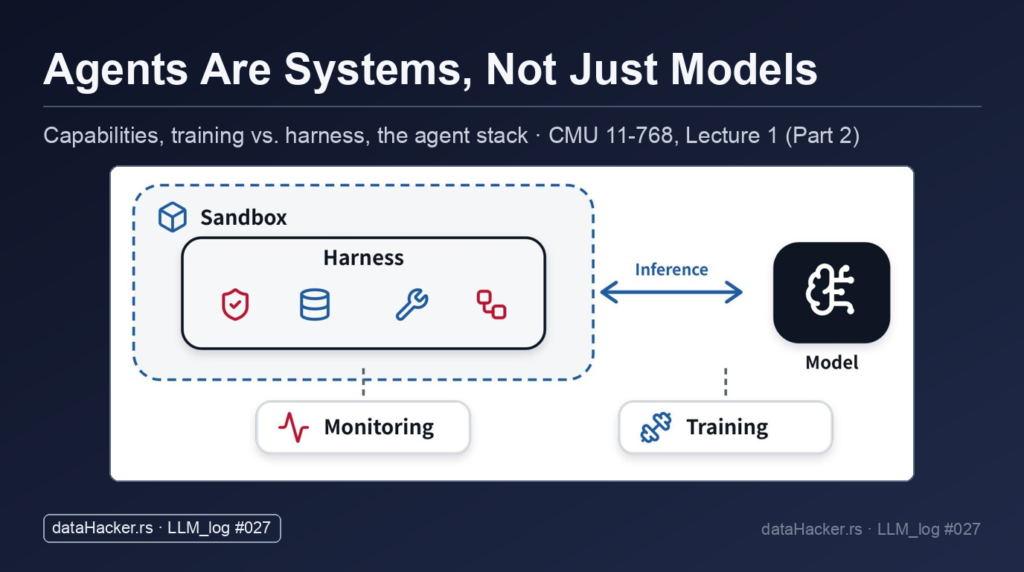
Agent Capabilities and Harness Engineering — Why Agents Are Systems, Not Just Models Highlights: In Graham Neubig’s segment of CMU 11-768: AI Agents (taught with Daniel Fried), the argument is that assembling an agent is easy while making one work reliably is not. We walk through the capabilities that separate the two — tool calling, long-context coherence, customizability, task management, environment understanding, and safety — and the two levers available for each: harness engineering and…
Read more
LLM_log #026: What Are AI Agents and How Do They Work? — From Tool Calls to the ReAct Loop

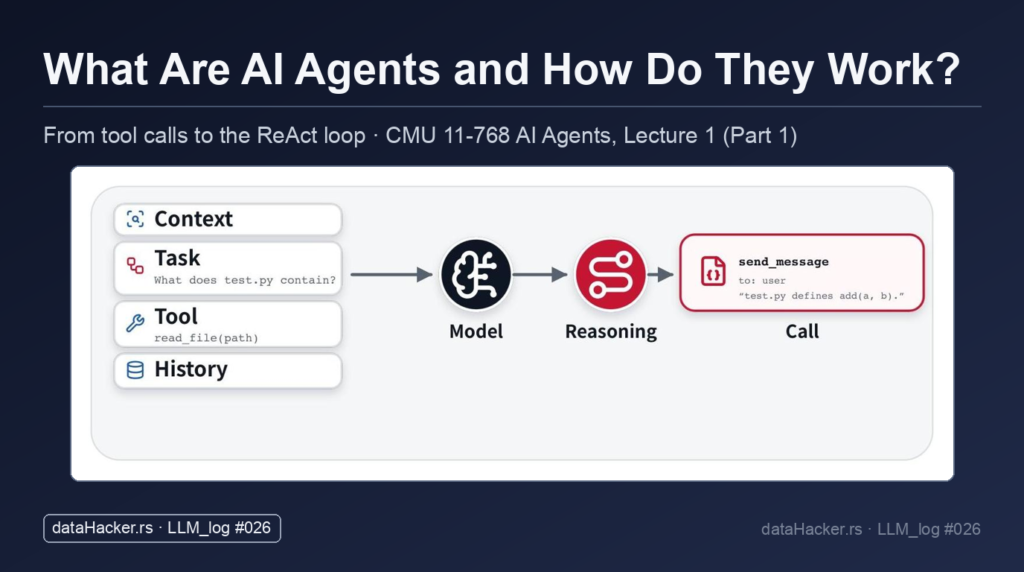
What Are AI Agents and How Do They Work? — From Tool Calls to the ReAct Loop Highlights: The opening lecture of CMU’s 11-768: AI Agents (Fall 2026), taught by Daniel Fried and Graham Neubig, sets out what an agent actually is and where current systems break down. We walk through the anatomy of an agent — environment, observations, actions, reward — and follow the path from plain next-token prediction to tool calls, chat templates,…
Read more

LLM_log #025: Fame and Uniqueness — Measuring What Makes a Cover Memorable

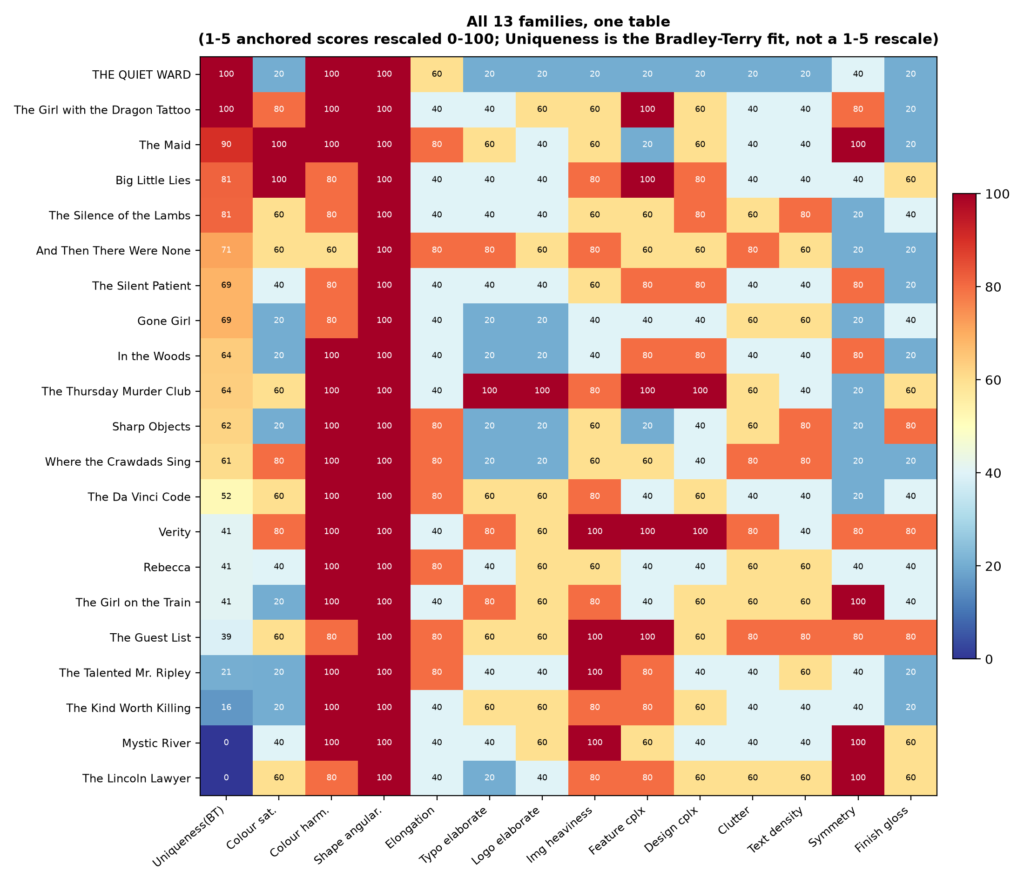
Fame and Uniqueness: Measuring What Makes a Cover Memorable Highlights: Romaniuk’s Distinctive Brand Asset framework (2018) splits brand memorability into two axes — Fame (exposure history) and Uniqueness (visual distinctiveness) — but only one of them is recoverable from a picture. We build a full measurement pipeline on top of Gemini 2.5 Pro: genuine pairwise visual-distinctiveness judgments aggregated with the Bradley–Terry model (not a single holistic LLM call), a 13-family literature-grounded absolute-scoring taxonomy, and real…
Read more

LLM_log #024 Visual Complexity Without an LLM Judge — Head-to-Head Against Gemini

Visual Complexity Without an LLM Judge — Head-to-Head Against Gemini Highlights: LLM/VLM pairwise judges have a structural position bias — the first-shown candidate wins more often than it should, worst-case exactly on close calls. We replace the LLM judge with a transparent, CPU-only alternative: handcrafted complexity features + logistic regression on the signed difference \( \mathbf{d} = f(A) – f(B) \). The same fit gives you a per-image score \( \text{score}(x) = \mathbf{w} \cdot f(x)…
Read more

LLM_log #022: Vision Transformer From Scratch — From Pixels to Tokens (Part 1)

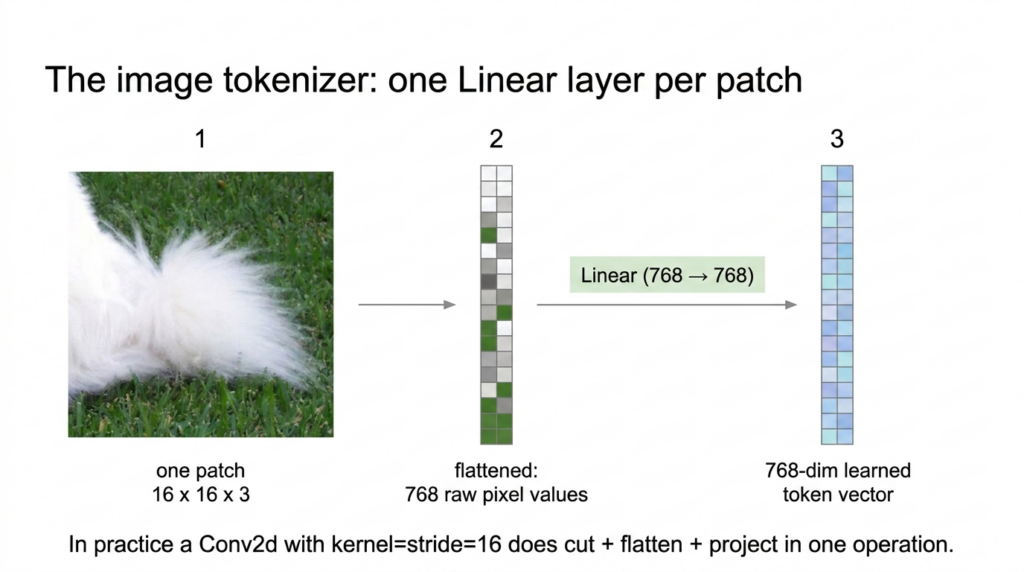
Highlights: An image is just a matrix — but the Transformer eats sequences of vectors. The whole “vision” trick of ViT lives in how that matrix is turned into a sequence. We cut a 224×224 image into a fixed 14×14 grid of 16×16 patches, flatten each, and project it through ONE learned Linear layer. Patches are not sampled — every cell of the grid becomes a token, in fixed order. We prepend a learnable [CLS]…
Read more